John Kay’s Biography

John Kay is one of Britain’s leading economists. His work is centred on the relationships between economics, finance and business. His career has spanned academic work and think tanks, business schools, company directorships, consultancies and investment companies. Today his main focus is on writing and he is renowned for his ability to express complex ideas clearly and succinctly.
John has been a Fellow of St John’s College, Oxford since 1970. In 1979 he became research director and then director of the Institute for Fiscal Studies, establishing it as one of Britain’s leading think tanks with a fearsome reputation for independence. In 1986 he founded an economic consulting business which became Europe’s leading autonomous economics consulting company. He was the first dean of Oxford’s Said Business School and has held chairs at London Business School, the University of Oxford, and the London School of Economics. He is a Fellow of the British Academy and the Royal Society of Edinburgh.
Born and educated in Edinburgh, he has been a member of the Scottish Government’s Council of Economic Advisers and chaired the Review of Equity Markets and Long Term Decision Making which reported to the UK government’s Department of Business, Innovation and Skills. Following the outcome of the referendum on British membership of the European Union in June 2016, he was appointed a member of the Standing Council on Scotland and Europe appointed by the First Minister of Scotland, Nicola Sturgeon.
John Kay is a director of several public and private companies. He is the author of many articles and has contributed regularly to the Financial Times for over 20 years. His books include Foundations of Corporate Success (1993), The Truth about Markets (2003) and Obliquity (2011): his most recent book, Other People’s Money, was published in 2015 to wide acclaim. The second edition of his 2009 book The Long and the Short of It – finance and investment for normally intelligent people who are not in the industry was published in November 2016. Radical Uncertainty, jointly written with Mervyn King, was published in March 2020, and Greed is Dead, jointly written with Paul Collier, was published in July 2020.
John’s work has been honoured by many different bodies. He became Commander of the British Empire in the Queen’s New Year Honours List of 2014, and was knighted in the Queen’s Birthday Honours List of 2021. He has been elected an honorary fellow of the Society of Investment Professionals and the Chartered Institute of Taxation and received the Daniel J Forrestal III award for Leadership in Professional Ethics and Standards of Investment Award from the Chartered Financial Analysts Institute. He has been awarded honorary degrees by Heriot Watt University, and his alma mater the University of Edinburgh. The Truth about Markets was declared Politics Book of the Year in 2005 by the Political Studies Association. He received the Senior Wincott Award for Financial Journalism in 2011 for his Financial Times columns; Other People’s Money was a book of the year for The Economist, Financial Times, and Bloomberg and was shortlisted for the Orwell Prize for Political Writing.
John Kay: Biographical Note
I was born in Edinburgh, Scotland in 1948, and completed my schooling and undergraduate education in that city. My mother continued to live in Edinburgh and when she died at the end of 2006 I thought my visits to Scotland would become less frequent. But when Alex Salmond became First Minister of Scotland after the election in May 2007 he invited me to join the Scottish Government’s newly established Council of Economic Advisers, and this has meant more contact with my Scottish roots. I am fortunate to have lived most of my life in beautiful places. I went to the University of Edinburgh to study mathematics. But, after taking a subsidiary course in economics, I decided that I wanted to be an economist.
The notion that one might understand society better through the application of rigorous and logical analysis excited me – and it still does.
After graduating, I went to Nuffield College, Oxford. I worked there under James Mirrlees, who was in due course to win the Nobel Prize for his contributions to economic theory. On Mirrlees’ advice, I applied for and to my astonishment got a permanent teaching post in the University of Oxford at the embarrassingly early age of 21. Oxford is a collegiate university – members of the faculty generally have both University and College appointments. This post carried with it a fellowship at St John’s College, an association which I have maintained and enjoyed ever since.
Through the 1970’s I developed a conventional academic career, publishing in academic journals, and writing my first book Concentration in Modern Industry (with Leslie Hannah, an economic historian colleague). My particular interests were in public finance and industrial organisation. But my rationale for studying economics had, from the beginning, been concerned for application. My career began to change direction when I was asked to join a group to review the structure of the British tax system. This group was established under the auspices of a newly established think tank, the Institute for Fiscal Studies, and was headed by James Meade, another economist who had achieved the ultimate distinction of a Nobel prize. Meade’s rigour was as demanding as that of Mirrlees, (both delivered it with considerable personal charm). But the most important effect of my experience with the Meade Committee was that I began to develop a taste for the popular exposition of economic concepts.
In this vein, I wrote (with Mervyn King, now Governor of the Bank of England) a more personal account issues in taxation, The British Tax System which ran through five editions. Pursuing these interests, I moved from Oxford and joined the Institute for Fiscal Studies as its first research director. Soon after I became Director of the Institute. IFS developed into (and remains) one of Britain’s leading think tanks, respected and feared by policymakers and journalists for its fiercely independent analysis of fiscal issues.
After seven years, I decided it was time to move on. The success of IFS had been built on serious economics accompanied by a commitment to popularisation and application. If this could be done for public policy issues, could the same be done in the area of business policy? This was the thinking that led me to accept a chair at the London Business School in 1986 and, at the same time, to establish a consulting company, London Economics.
Over the next few years, the application of economics to business issues became my intellectual focus. During this period, London Economics grew rapidly, largely on the back of the wave of privatisation and regulatory change in Britain in the 1980’s. By 1991, managing the company had become a major responsibility. I revised my arrangements with London Business School. My new contract was as Visiting Professor but my job as executive chairman of London Economics took the larger part of my time. London Economics grew until, by its tenth anniversary, its annual turnover exceeded £10m with offices in three continents and assignments in over sixty countries.
London Economics gave me insights into the business world. These came both through consultancy work with major corporations and first hand observation of the growth and development of a small business.
Other activities have enriched my more scholarly work by broadening the experience on which it draws. I have been a director of several investment companies, and was for nine years a director of Halifax plc, one of the largest retail financial services businesses in Europe (and left the board well before the events which led to its disastrous collapse in 2008). Other tasks have included membership of the task force which began the process of reviewing the Lloyds insurance market, acting as a director of the Investors Compensation Scheme, and being a member of the steering group for the government’s review of company law.
What I write and think today is a product of a combination of this practical knowledge of the business world and an academic training in industrial economics. (Although the industrial economics of today is very different from that which I learned as a student: oddly both more relevant to business problems and more distant from them.) Some of the results of this can be found in Foundations of Corporate Success (1993) (an American version is Why Firms Succeed (1995)) and The Business of Economics (1996). And in the column which I have written for the Financial Times since 1995. Since 2004 this has been a weekly op-ed piece, which currently appears on Wednesdays.
In 1996 I was attracted by the idea of going back to Oxford to help establish a new business school there and gave up the Chairmanship of London Economics to take the Directorship of the newly created Said Business School. So I became, improbably, Professor of Management at the University of Oxford. And when, in 1997, I became the first Professor of Management to be elected a Fellow of the British Academy, it became possible to believe that the study of business was, even in Britain, achieving intellectual respectability.
The last decade has been a bizarre period in which to be a business economist and never more so than in 1999 and early 2000, when the greatest speculative bubble in economic history expanded far beyond reason – and finally burst. Never were the principles of business economics so much on trial, as once serious commentators proclaimed that old principles of evaluation were redundant and the rules of business success had entirely changed. And, of course, these principles were vindicated in the end. The answer to those who shook their heads and told adherents of the old rules – like me – that they ‘just didn’t get it’ was that there was very little to get.
At the end of 1999 I became seriously ill and, although recovery from that seems to be complete, it left me with an ongoing determination not to do things that weren’t enjoyable and productive. Mostly, that has been popular writing with a serious theme. In August 2002 I completed The Truth about Markets, which was published in the UK and Europe in 2003 and as Culture and Prosperity in the United States in 2004. The book has now been translated into several other languages.
The core argument of The Truth about Markets was that although the evidence that the market economy was a superior model of economic organisation was overwhelming, the commonly presented description of how markets worked was a travesty. This account, which I described as ‘the American business model’ treated greed as dominant human motivation, emphasised a kind of market fundamentalism, and limited the role of the state to little more than the enforcement of property rights and contract, and perhaps the provision of a basic welfare safety net. This is not even a good account of the American economy: there are many different kinds of market economy, each the product of a particular social content. This argument has only been strengthened by subsequent events.
In 2004, I published a book of collected columns on economic subjects – Everlasting Light Bulbs – and in 2006 a selection on business issues – The Hare and the Tortoise. There were three major themes to reading, writing and reflection over that period: the relationship between business and society: the nexus between politics and society: and the ways in which we make decisions in a world characterised by fundamental uncertainty.
Obliquity originated as a long article I wrote in the Financial Times in 2004, on the theme that complex goals were rarely best achieved through direct pursuit: the happiest people were not those who pursued happiness, the wealthiest people not the most materialistic, the most profitable companies not the most profit oriented. Further reflection on the how and why of this thesis led to my latest book, Obliquity, published in the UK in 2010 and in the US in 2011.
The financial crisis of 2007-8 has dominated subsequent discussion of economic policy. In my view the responses are characterised by two widespread misunderstandings. The first mistake is to believe the crisis is an inexplicable, once in a lifetime, event, rather than another demonstration of an increasingly dysfunctional financial system. The second error is an extreme naiveté about what regulation can achieve. In various articles, and in an extended essay Narrow Banking, published in September 2009 by the Centre for the Study of Financial Innovation, I have tried to set out these views and their implications. The issues could hardly be more important. I also thought there was a need for a guide for bemused individuals who wanted to understand what was happening and get practical guidance as to how to steer through it. The theme of The Long and the Short of It published in January 2009 is how to take financial management into your own hands.
The crisis also raised questions about the nature and role of economics itself. I have been keen to take part in this debate, and among other initiatives have joined the advisory board of the Institute for New Economic Thinking established with a major donation from George Soros.
Today there are more subjects of urgent importance to write about than time to write. I plan to work on the economics of rents and rentseeking, present more material on the role of the financial sector, on Scotland, on Europe.
John Kay’s Philosophy
Most business people think that the job of the economist is to predict whether exchange rates will go up or down. Economists are not very good at predicting whether exchange rates will go up or down, with the result that business people have very little regard for economists.
My interests are different. Virtually all my work has been in microeconomics. My professional objective is to use the tools of economics to understand change in the structure of firms, industries and markets. So do not look on this site for predictions of exchange rate or forecasts of economic growth: you will not find them.
September 2016
My work is concerned with the interaction between economics and business. Pluralism is the guiding principle of my work and my approach to it. Isaiah Berlin famously wrote ‘there exists a great chasm between those, on one side, who relate everything to a single central vision and, on the other side, those who pursue many ends, often unrelated and even contradictory. The first kind of intellectual and artistic personality belongs to the hedgehog, the second to the fox’. I seek, unequivocally and unapologetically, to be the fox who seeks to know ‘many little things’, rather than the hedgehog who knows ‘one big thing’.
Four axioms follow:
- tell it how it is
- markets operate in a social context
- consistency is an overrated axiom
- economics must be studied in a pluralist manner
Tell it how it is
The years between 1979 and 1986 were perhaps the most formative experience of my life. At that time I was Director of the Institute for Fiscal Studies, and helped it to developed from an embryo into perhaps the most respected of UK think tanks. From the outset, I and my colleagues determined that our work would be driven by data and that we would follow that data wherever it led us. People who joined our staff might carry ideological baggage with them – why else would they be interested in policy research? – but they must leave that baggage at the door.
‘We are interested in ensuring that policy is made well’, I would tell new recruits, ‘and what that policy is must be secondary’. Many outsiders found this perspective difficult to understand, and some of those who worked for us left to pursue their political or ideological objectives elsewhere. But most of those who worked at IFS found this approach refreshing, and so did journalists, and although many politicians hated us – and some tried to close us down – IFS not only survived but thrived. In the thirty years since I left, IFS has only enhanced the reputation for objectivity it acquired in these early years.
Telling it how it is ought to be the norm, in academia and in policy. And yet you so often know what someone will say about an event before they open their mouth, or even before it has occurred. It no longer surprises me, but it still shocks me, how many people discovered that the 2008 global financial crisis only served to confirm what they had been saying all along.
Markets operate in a social context
A popular caricature of the market economy sees it as populated by greedy people pursuing their own financial self interest. The genius of the market economy is that it coordinates such behaviour, not only to the degree necessary to prevent chaos (the common sense prediction of the likely outcome of uncoordinated behaviour) but to achieve the most efficient allocation of resources possible.
There is an element of truth in this account, but only an element, and the remarkable character of that truth has blinded many people to an understanding of the complex social and political context in which markets actually function. The epitome of an economy populated by self-interested opportunists is Nigeria (or Lehman Bros). The Nigerian economy does not function effectively and Lehman was destroyed by the conflicting self interests of its own employees
Property rights are a social construction, not a fact of nature, and the misallocation of property rights leads to economic inefficiency and social dissension. In successful market economies, self-interested behaviour is mediated, and agreements enforced, by trust relationships.
Risks are largely mutualised, and there is necessarily far more cooperative activity than the individualist caricature allows. In the absence of a widely shared sense of the legitimacy of both its processes and its outcomes, the market economy fails to operate effectively.
Most people are interested in money, but not exclusively so, and the evidence that their happiness depends more on their personal and working relationships than their material position is clear. The real strength of market economies does not lie in the overriding motivating power of cash incentives but in what I have called disciplined pluralism. Successful market economies allow individuals and businesses considerable freedom to innovate (pluralism) but provide honest feedback (discipline) through customer choice. The result is that successful innovations are widely imitated and unsuccessful ones quickly dropped. The key role of disciplined pluralism was the principal theme of my book The Truth about Markets.
Consistency is overrated
To the economist, almost every problem is a maximisation problem. Behind this way of thinking is a mathematical proposition: if individuals behave consistently, their behaviour can be described as maximisation. ‘Utility’ is often used as shorthand for whatever it is that these consistent individuals maximise. Similarly, businesses are assumed to maximise profits.
As I learnt more about business, it became obvious to me that though profit was certainly a business objective, companies did not maximise profits. In fact, when you start to think of profits as a stream of revenues over time, no one could prescribe with any clarity what companies should do to maximise their profits. So I found myself posing the question, natural to the economist: if companies did not maximise their profits, what did they maximise? A few heterodox economists had made alternative suggestions. Perhaps companies maximised sales, or revenues, or their rate of growth.
A moment of revelation led me to realise; perhaps companies did not maximise anything. Companies were pluralist in their objectives, as were individuals. The corporation was a political organisation, populated by individuals with different goals and purposes, sometimes compatible, often conflicting.
The senior executives of any organisation were tasked with managing this variety of expectations, buffeted by the competing demands of their investors, their employees, their suppliers and their customers. The role of the manager was to balance these factors, steering the company to survival and success. And survival was itself the measure of success – for the manager and for the company itself. The process of balancing incompatible demands was the reality of everyday life for both individual and corporation. This was the theme of my book Obliquity.
‘A foolish consistency is the hobgoblin of little minds, adored by little statesmen and philosophers and divines’, wrote Ralph Waldo Emerson. Consistency, as used in economics, is the requirement that the same choice is always made in the same situation. But in the complex real world of business and finance, there is no objective means of determining whether two situations are the same, or different. One person’s consistency (insisting that things have not changed) is another’s stubbornness (failing to recognise that they have). The attempt to analyse economic systems in terms of maximising behaviour is an approach far less powerful than it appears at first sight.
Pluralism in economics
My fourth axiom in large part follows from the first three – the rejection of ideology, the insistence on social context, the scepticism of the universality of maximising behaviour. The dominant paradigm in economics today is that of rational choice. This paradigm is widely criticised, notably by practical men – who dislike the whole idea of simplifying models – and by students, who would like an approach gentler in both its view of human behaviour and in its demands on their mathematical competence.
My reaction to these kinds of debate is determinedly pluralist. I believe that neo-classical economics offers many insights and should certainly not be discarded. But I also believe that to regard such rational choice modelling as the only valid way of looking at the world is wholly, and ridiculously, misconceived. My thinking is described in more detail in ‘The Map is not the Territory’.
Press Kit
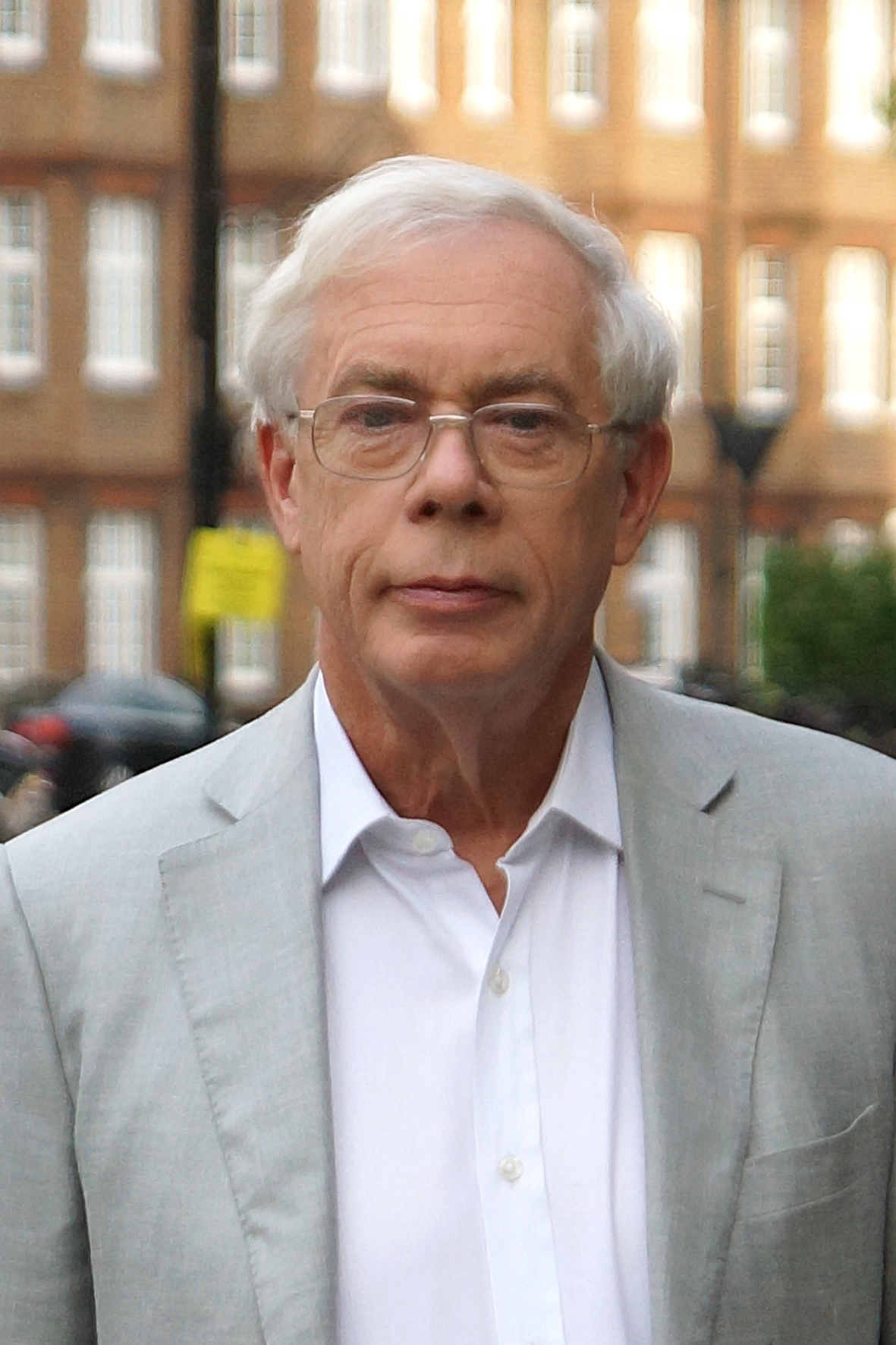
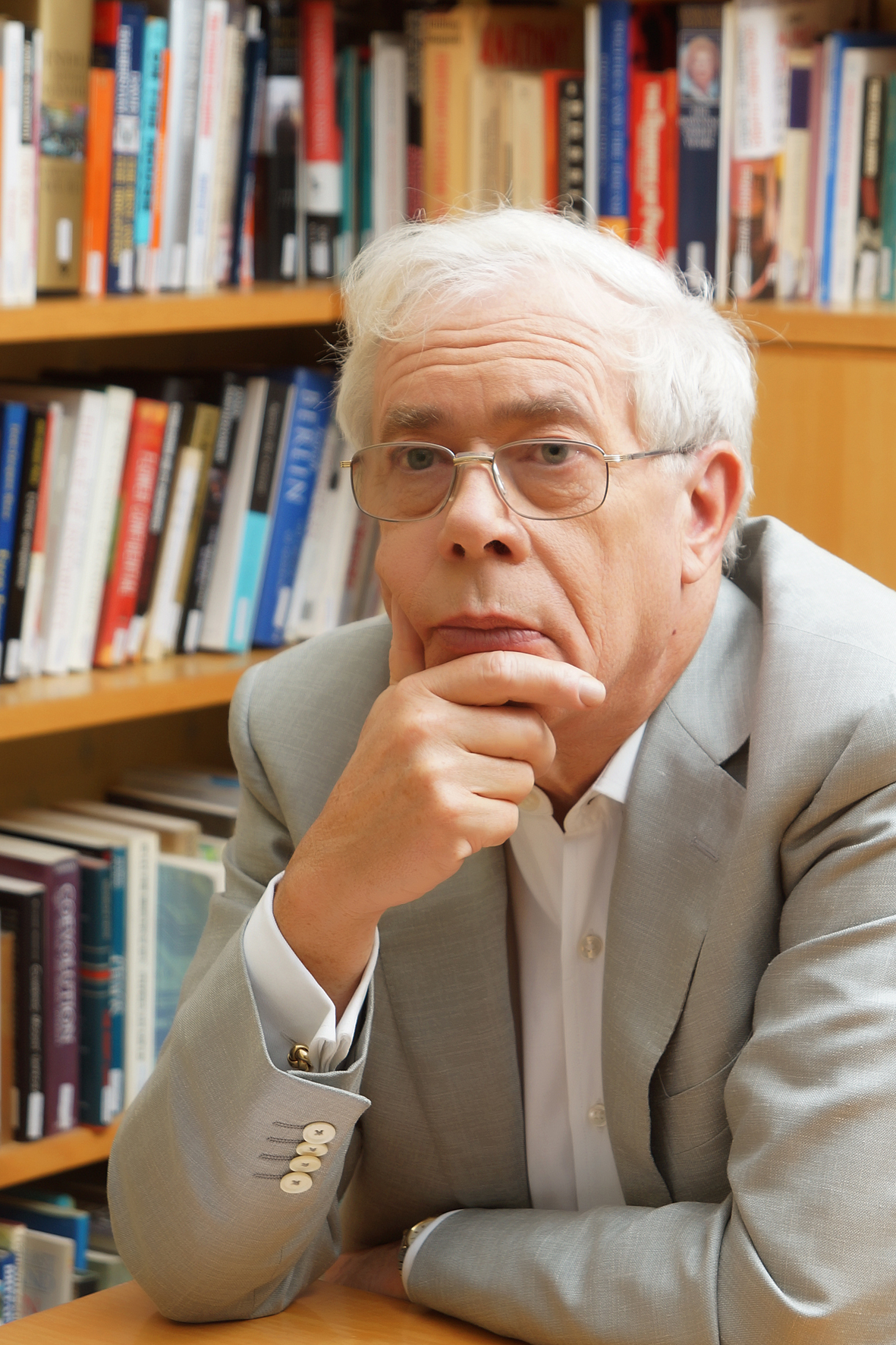
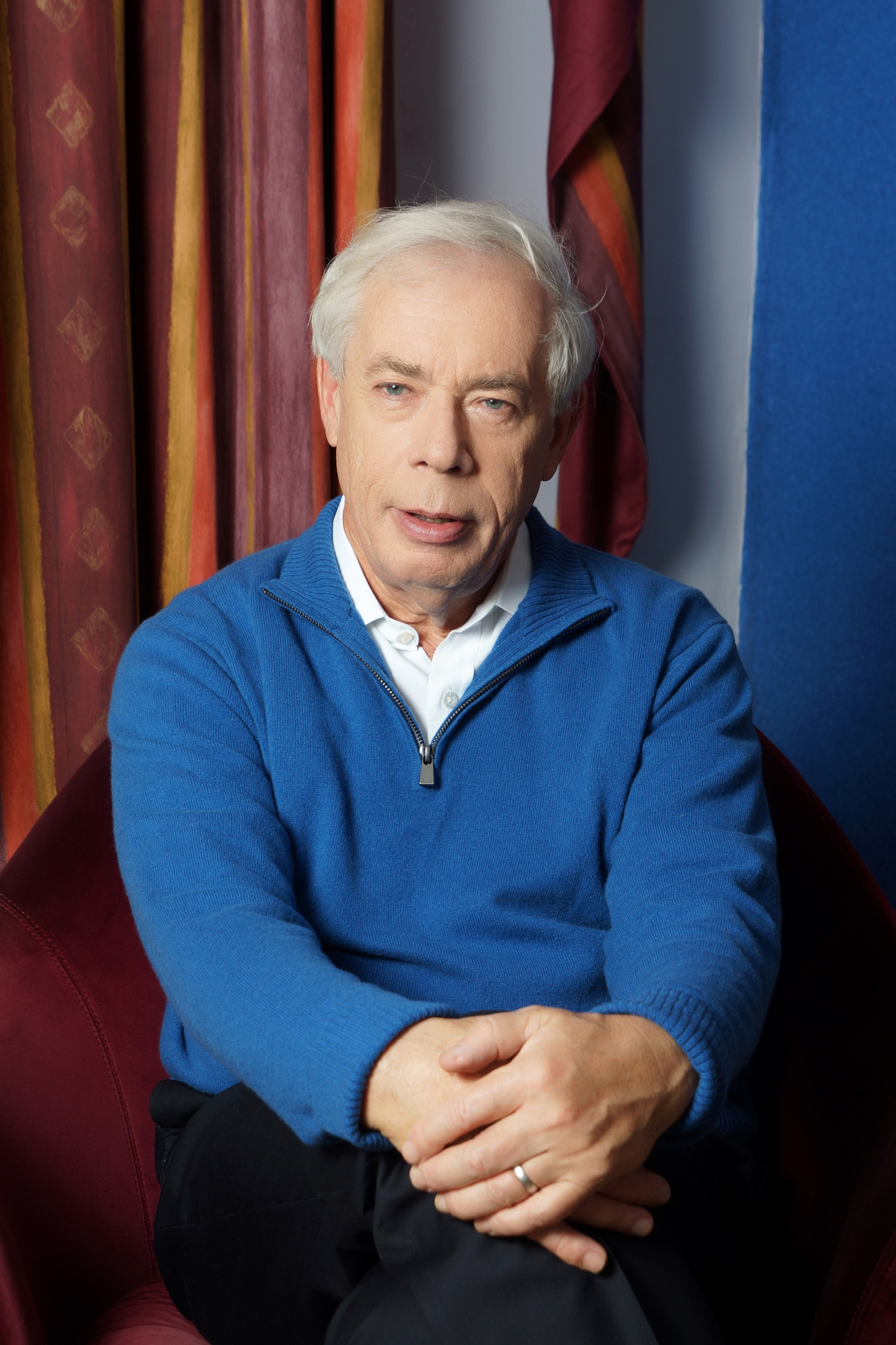
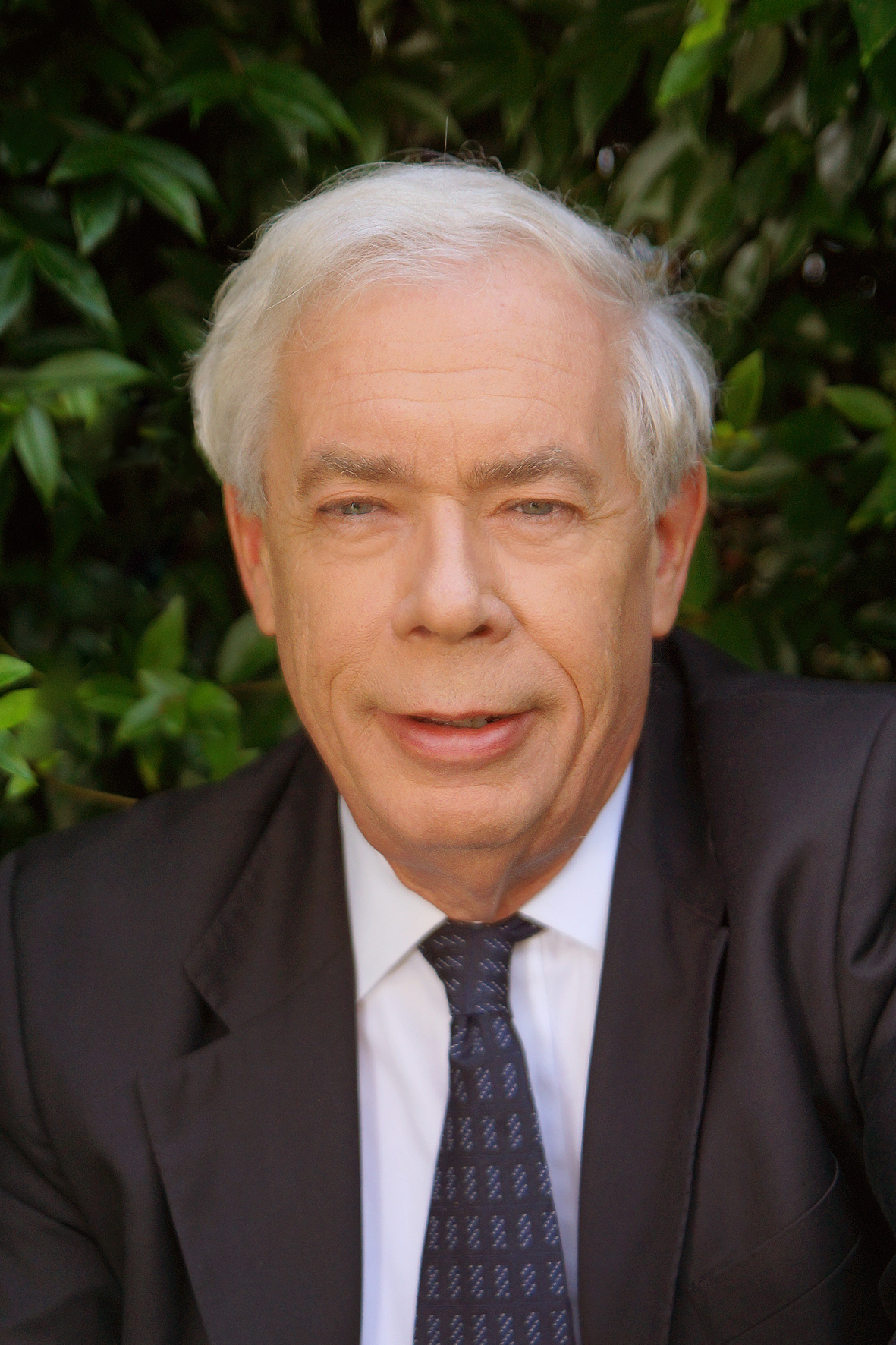
You are welcome to download John Kay’s CV and pictures. To download documents please click on the relevant pdf icon or link.
If you need any further information please contact us at info@johnkay.com
 John Kay’s bio John Kay’s biographical paragraph John Kay’s CV (including publication list)
The above documents are readable in Adobe Acrobat format. If you don’t have Acrobat you can download it for free from the Adobe webpage.
To download John Kay’s pictures in print quality, left-click on the picture, right-click on the big image that should appear, then choose “Save image as” to start downloading.